Cold Chain Storage Explained: Keeping Perishables Safe Across Saudi Arabia in 2026
Cold chain storage is the invisible backbone behind every fresh salmon fillet, tray of imported berries, and tub of premium ice cream that reaches a Saudi table. Break one link in that chain, and quality collapses long before the product ever reaches a shelf. Understanding how it works helps any food business protect both safety and profit.
Demand for chilled and frozen goods keeps climbing across the Kingdom. Rising quick-commerce grocery deliveries, expanding restaurant chains, and a growing appetite for imported produce all lean on temperature-controlled logistics. In 2026, getting the cold chain right is no longer optional; it is a competitive edge.
What Exactly Is the Cold Chain?
The cold chain is the unbroken series of temperature-controlled steps that carry perishable goods from source to consumer. Every stage, from harvest or slaughter through transport, storage, and final delivery, must hold the correct temperature.
Two temperature bands do most of the heavy lifting. Chilled storage keeps items just above freezing, while frozen storage locks products in deep cold to halt spoilage entirely.
Chilled Versus Frozen: Where the Line Sits
| Attribute | Chilled Storage | Frozen Storage |
|---|---|---|
| Temperature | 0°C to 5°C | -18°C or colder |
| Best for | Dairy, fresh meat, produce | Seafood, ice cream, bulk proteins |
| Typical shelf life | Days to weeks | Months |
| Energy demand | Moderate | High |
| Texture impact | Preserved fresh | Some change on thaw |
Businesses in the Eastern Province frequently rely on Chilled Storage in Dammam to hold fresh imports arriving through the ports before they move on to restaurants, hotels, and retail shelves.
Where the Cold Chain Breaks Down
Most cold-chain failures are not dramatic. They are small, repeated lapses that quietly erode quality. A loading dock that sits open too long, a delayed handoff, or a freezer that cycles above target overnight all add up.
The Most Common Weak Points
- Transfer gaps: The minutes between truck and cold room, when products warm fastest.
- Overloaded units: Packing too tight blocks airflow and creates warm pockets.
- Poor monitoring: Without continuous logging, breaches go unnoticed.
- Door discipline: Frequent, prolonged openings spike internal temperatures.
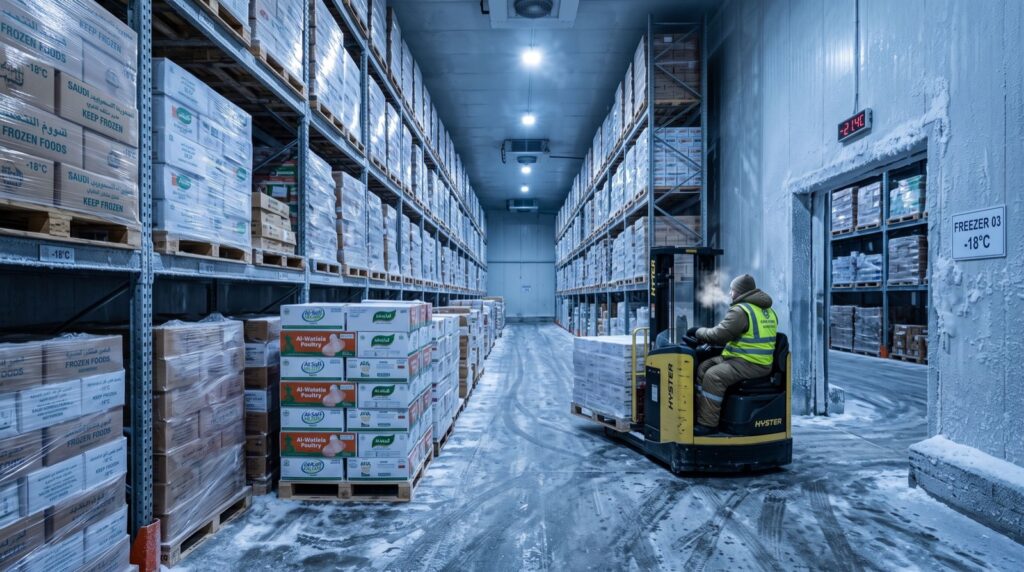
For deep-frozen inventory, purpose-built facilities matter. Operators handling long-hold stock often turn to Frozen Storage in Riyadh to keep seafood, meat, and frozen desserts locked at safe temperatures through the harshest months.
Building a Resilient Cold Chain
Resilience comes from process, not luck. The businesses that rarely lose a shipment follow disciplined routines and back them with real data.
An Eight-Point Cold Chain Checklist
- Pre-cool trucks and cold rooms before loading.
- Minimise dock time during every transfer.
- Use continuous temperature loggers, not spot checks.
- Set alarms for out-of-range readings.
- Keep products off floors and away from walls for airflow.
- Rotate stock with strict FIFO discipline.
- Train every staff member on door and handling protocol.
- Audit and calibrate equipment on a fixed schedule.
During a summer heatwave, I watched a distributor lose an entire pallet of imported cheese simply because a reefer door stayed open during a lengthy manual count. A five-minute logging habit and a stricter door rule would have saved thousands. The lesson stuck.
What made the difference afterward was consistency. The team turned each checklist point into a fixed daily habit rather than an occasional effort, and losses dropped sharply within a single season. Cold chain discipline is not about heroic fixes; it is about doing the small, boring things correctly every single shift, without exception.
Compliance Is Not Optional
Temperature-controlled food falls under strict oversight in Saudi Arabia. Align your logs and handling practices with the official requirements published by the Saudi Food and Drug Authority, and keep auditable records so any inspection or recall can be traced quickly.
The Role of Monitoring Technology in 2026
Cold chain management has moved far beyond a clipboard and a wall thermometer. Modern facilities lean on connected sensors that log temperatures around the clock and flag any drift the moment it happens. This shift turns temperature control from a hope into a measurable, provable fact.
Real-time monitoring does more than catch problems. It builds an audit trail that satisfies regulators, reassures customers, and speeds up any investigation if a shipment is ever questioned.
What Good Monitoring Delivers
- Continuous logs: Every reading recorded, not just occasional spot checks.
- Instant alerts: Notifications the moment a unit drifts out of range.
- Historical data: Complete records for audits and traceability.
- Remote visibility: Managers can check conditions without standing in the cold.
For any business handling high-value perishables, this level of oversight is fast becoming the baseline rather than a premium extra.
Energy, Sustainability, and Cost Control
Frozen and chilled storage consume significant energy, and in the Saudi climate those cooling loads run high. Efficient facilities offset this through better insulation, well-maintained compressors, and disciplined door management that keeps cold air where it belongs.
For the business owner, efficiency translates directly into lower costs and a smaller footprint. Ask any prospective partner how they manage energy and maintenance; a facility that runs tight on efficiency usually runs tight on reliability too. The two tend to go hand in hand.
How Do You Choose a Cold Storage Partner?
Not every facility is equal. The best cold storage partners combine reliable refrigeration, transparent monitoring, fast retrieval, and clean, well-maintained sites. Ask to see their temperature records and their contingency plan for power outages.
A strong partner also scales with you, adding chilled or frozen capacity as your volumes grow. Working with reputable service experts means the technical side stays handled while you concentrate on selling and serving. Reliability at the storage stage protects everything downstream.
Frequently Asked Questions
What temperature should chilled storage maintain?
Most chilled storage holds between 0°C and 5°C. Dairy, fresh meat, and produce stay safest at the lower end, so confirm the exact range your specific products require and monitor it continuously.
How long can frozen products stay safely stored?
Kept steadily at -18°C or colder, many frozen proteins and seafood last several months without safety concerns, though quality slowly declines over time. Strict FIFO rotation keeps your oldest stock moving first.
What happens if the cold chain is briefly broken?
A short, minor breach may not spoil a product outright, but repeated or prolonged breaches accelerate bacterial growth and degrade quality. Continuous monitoring lets you catch and correct lapses before they cause loss.
Can one facility handle both chilled and frozen needs?
Yes. Many full-service providers operate separate chilled and frozen zones under one roof, which simplifies logistics and lets you split inventory by temperature without juggling multiple contracts.
Final Word
A well-run cold chain storage system protects perishables, satisfies regulators, and defends your margins from the first handoff to the final delivery. Understand the chilled and frozen bands, close the common weak points, follow a disciplined checklist, and choose a partner who scales with you. Master these fundamentals in 2026, and your perishables will arrive fresh, safe, and profitable every single time. Review your cold chain today and strengthen its weakest link.