
Somewhere on your social feeds sits a video that outperformed everything else you posted last year — and it is doing absolutely nothing for you today. Most creators and small businesses treat content as disposable: film, post, watch the metrics spike, move on. Meanwhile the platforms themselves reward relentless volume, and the treadmill of constantly producing brand-new material exhausts budgets, calendars, and enthusiasm in roughly that order.
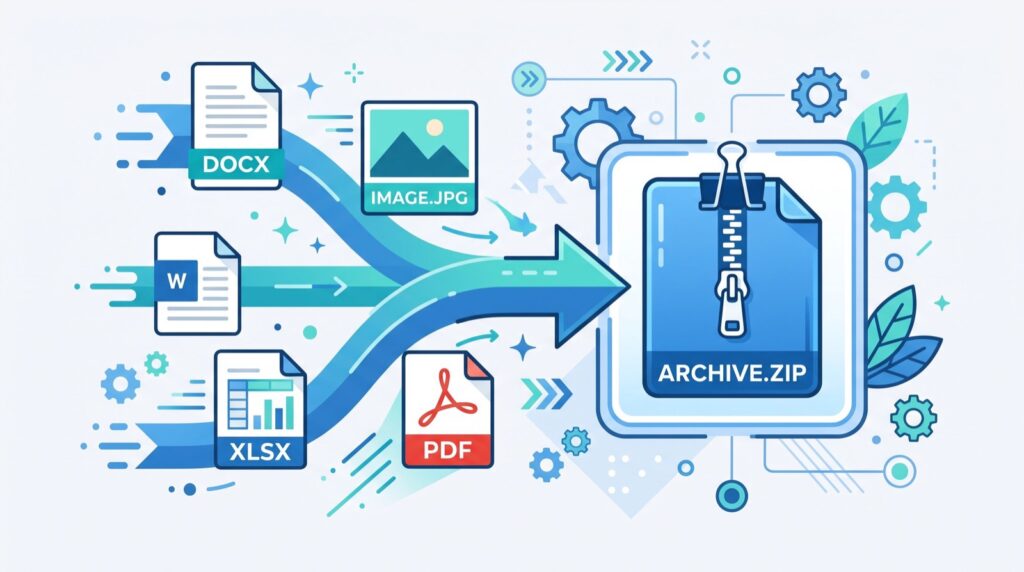
Repurposing breaks the treadmill. One well-made clip can become a vertical short, a newsletter embed, a blog illustration, a slide in a sales deck, and a testimonial on your website — five assets for one filming session. This article lays out a realistic repurposing workflow: how to archive what you have already made, reshape it for each destination, extend your graphics beyond the screen entirely, and stay on the right side of platform rules while doing it.
Why Repurposing Beats Producing More
The mathematics of attention argue strongly for reuse. Only a fraction of your audience sees any single post — organic reach on most networks hovers in the single digits — so republishing an idea in a new format mostly reaches people who never encountered it the first time. Far from boring your followers, thoughtful repurposing is how the majority of them finally meet your best material.
There is a quality argument too. Your top-performing clips have already survived the harshest editor there is: a real audience. Rebuilding from proven winners means every derivative asset starts with validated substance, which is a far better bet than gambling production hours on untested ideas week after week.
Archive Your Own Posts Before You Need Them
Here is an uncomfortable truth about social platforms: the copy of your video living on their servers is not really yours. Accounts get locked, posts get removed by moderation mistakes, formats get deprecated, and original files vanish when laptops die. The first step of any repurposing system is pulling your published work back into storage you control. When you need to download Twitter videos you posted months ago — perhaps the original file is long gone from your phone — a browser-based downloader retrieves the clip in seconds, ready for re-editing.
Build the archive deliberately: a cloud folder organized by month, with a simple spreadsheet noting each clip’s topic, length, and performance. An hour of setup turns “I think we posted something about that once” into a searchable library of raw material.
Reformat for the Platform, Not Just the Screen
Cross-posting the identical file everywhere is the lazy version of repurposing, and audiences can smell it. Each network has a native grammar: vertical 9:16 with bold captions for short-form feeds, square crops for in-feed scrolling, landscape for embedded players and presentations. Silent viewing dominates almost everywhere, so burned-in subtitles are no longer optional garnish — they are the primary way most people “watch.”
Re-editing also means re-cutting. A three-minute explainer might yield four fifteen-second hooks, each opening with its strongest moment rather than a slow build. Treat the original as footage, not as a finished product to be copied around.
Take Your Graphics Beyond the Feed
Repurposing is not only about video. The charts, diagrams, logos, and infographics you build for social posts are usually created as vector files, and vectors travel beautifully into the physical world. Running artwork through an SVG to PDF converter turns a web graphic into a print-ready document in one step — suddenly the infographic from last quarter’s campaign becomes a one-page leave-behind for sales meetings, a poster for a trade-show booth, or a clean attachment for a client email.
This screen-to-paper bridge is chronically underused. Digital teams forget that plenty of persuasion still happens in conference rooms and mailboxes, where a crisp printed piece derived from proven online content carries the same message into a channel competitors have abandoned.
The Rights Question Nobody Wants to Ask
A firm rule keeps repurposing ethical and safe: reuse freely what you made, and ask before reusing what anyone else made. Downloading your own published clips for re-editing is standard practice. Reposting someone else’s video without permission is a different matter entirely — copyright applies, platform policies prohibit it, and the “credit in bio” custom is not a license.
The good news is that permission is usually one polite message away. Customers who tag you in videos are typically delighted to have their clip featured; just get the yes in writing, credit them visibly, and keep a record. Licensed music deserves the same caution: a track cleared for one platform’s library is not automatically cleared for your website or a paid advertisement.
Case in Point: Service Businesses
No sector wastes video quite like local services. A single customer testimonial or dramatic before-and-after clip is often posted once and forgotten, when it could anchor months of marketing. Home-improvement trades illustrate the pattern well — the solar installers, roofers, and renovation crews regarded as reputable service experts in their markets tend to be exactly the ones squeezing every job-site video into review pages, quote follow-ups, and neighborhood-targeted ads.
The lesson transfers to any business built on demonstrated results: one genuine moment of customer satisfaction, captured on a phone, outperforms polished studio footage in nearly every trust-sensitive context. Repurposing simply makes sure that moment is seen more than once.
A One-Hour Weekly Routine
Sustainable beats ambitious. Block a single hour each week: ten minutes reviewing analytics to spot which recent post earned reuse, twenty minutes pulling source files into your archive, and thirty minutes producing exactly one derivative — a re-cut short, a print piece, a newsletter embed. One hour, one new asset, every week, indefinitely.
Resist the urge to batch-convert everything in a heroic weekend. Repurposing works as a rhythm, not a project; fifty-two thoughtful derivatives a year will quietly out-compound any one-time content blitz.
Key Takeaways
- Low organic reach means republishing mostly reaches people who missed the original — repetition is a feature.
- Archive your published videos in storage you control; platform copies can vanish without warning.
- Re-edit for each destination: aspect ratio, captions, and a strong opening beat every straight cross-post.
- Convert vector graphics to PDF to extend digital campaigns into print, decks, and leave-behinds.
- Reuse your own work freely; get written permission before reusing anyone else’s.
- One focused hour per week producing one derivative asset beats sporadic batch efforts.
Conclusion
The content treadmill persists because “post more” is easier advice to give than “use what you have better.” But the creators and businesses who compound fastest are rarely the ones filming the most — they are the ones extracting the third, fourth, and fifth use from material that already proved itself. Repurposing is simply respect for your own best work, expressed as workflow.
Start with an inventory rather than a plan: list your five best-performing videos from the past year, retrieve the files, and choose one new home for each. That single exercise usually surfaces a month of publishing material from work you have already paid for — and once you have felt that leverage, the film-post-forget habit never quite comes back.